Geo Pets World
Open the map and collect what is nearby
A location-based creature-collecting game, rebuilt from my own Geo Pets prototype with AI agents as the development team.
- Status
- Prototype
- Type
- Game
- Platforms
- Android
- Engine
- Unity
- Year
- 2026
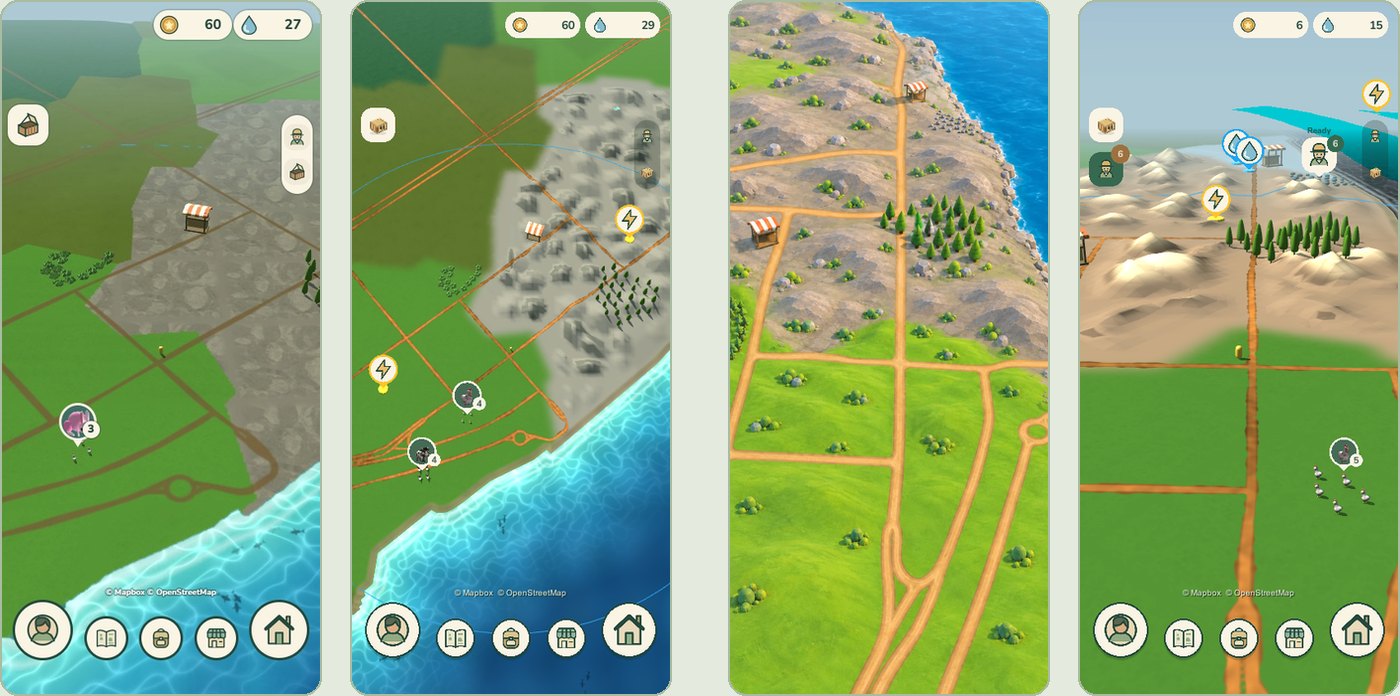
Geo Pets World is a game you play by going out. The map is the real one around you, drawn as a small 3D world. The roads, the shoreline and the lie of the land come from map and elevation data, and the biome you are standing in decides how the ground looks and what lives on it. Nearby there are things to collect, creatures to trap, patches where workers gather and stalls to trade at. Your Hometown floats above the map. It is a rebuild of Geo Pets, a prototype I programmed in Unity. This time AI agents wrote the code.
The world
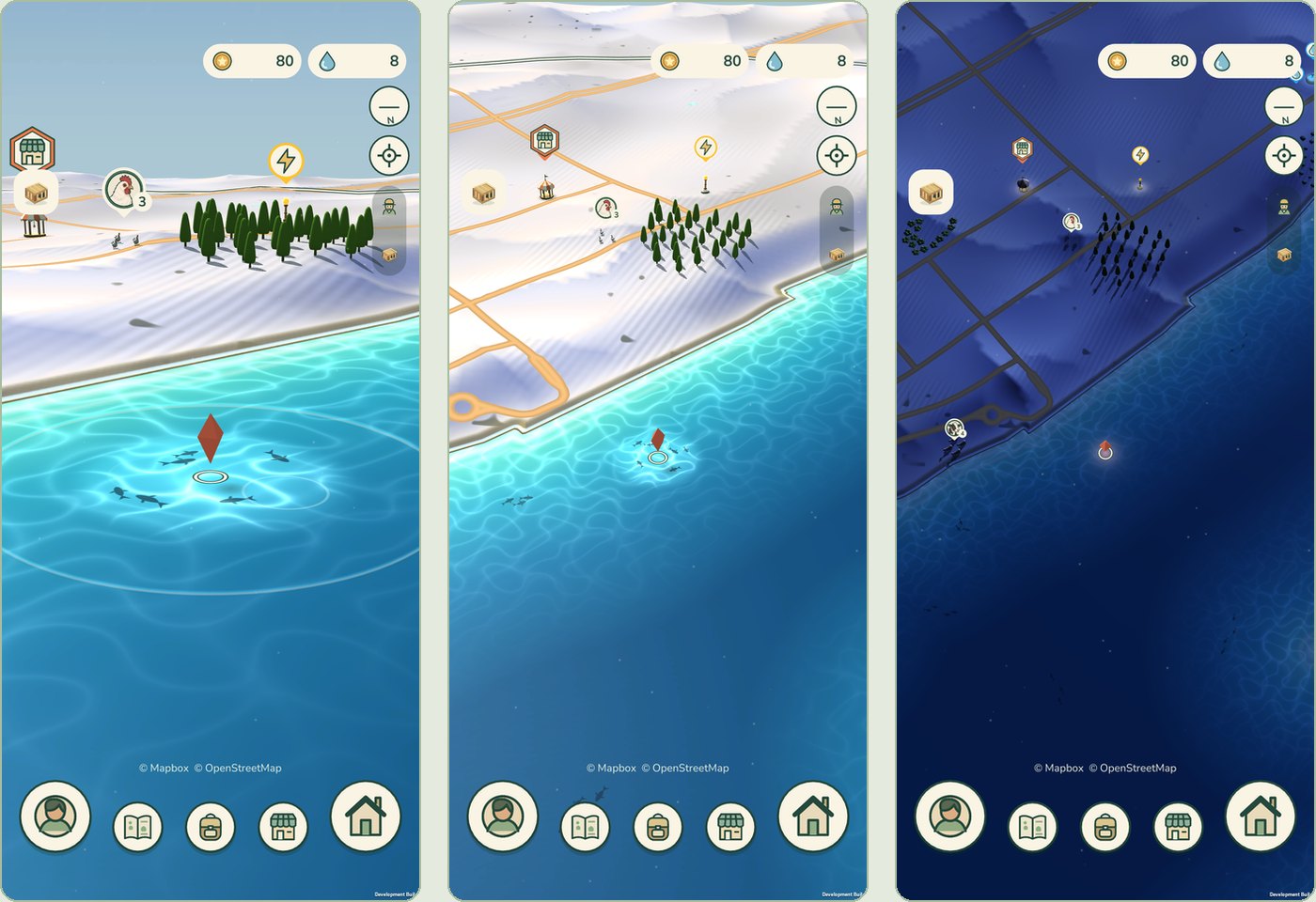
The map has three zooms, and each one changes the camera: close in with a horizon, the everyday view, and almost straight down with the whole range ring in sight. The light follows the real time of day. Shadows move as the day goes on, and at night the map keeps its own colours under moonlight. Water has depth and schools of fish, with a turtle, a ray or an eel surfacing now and then, and by day a skein of birds crosses the whole map. There are five biomes so far: Meadow, Grove, Marsh, Stonefield and Snow.
Collecting, crafting and trading
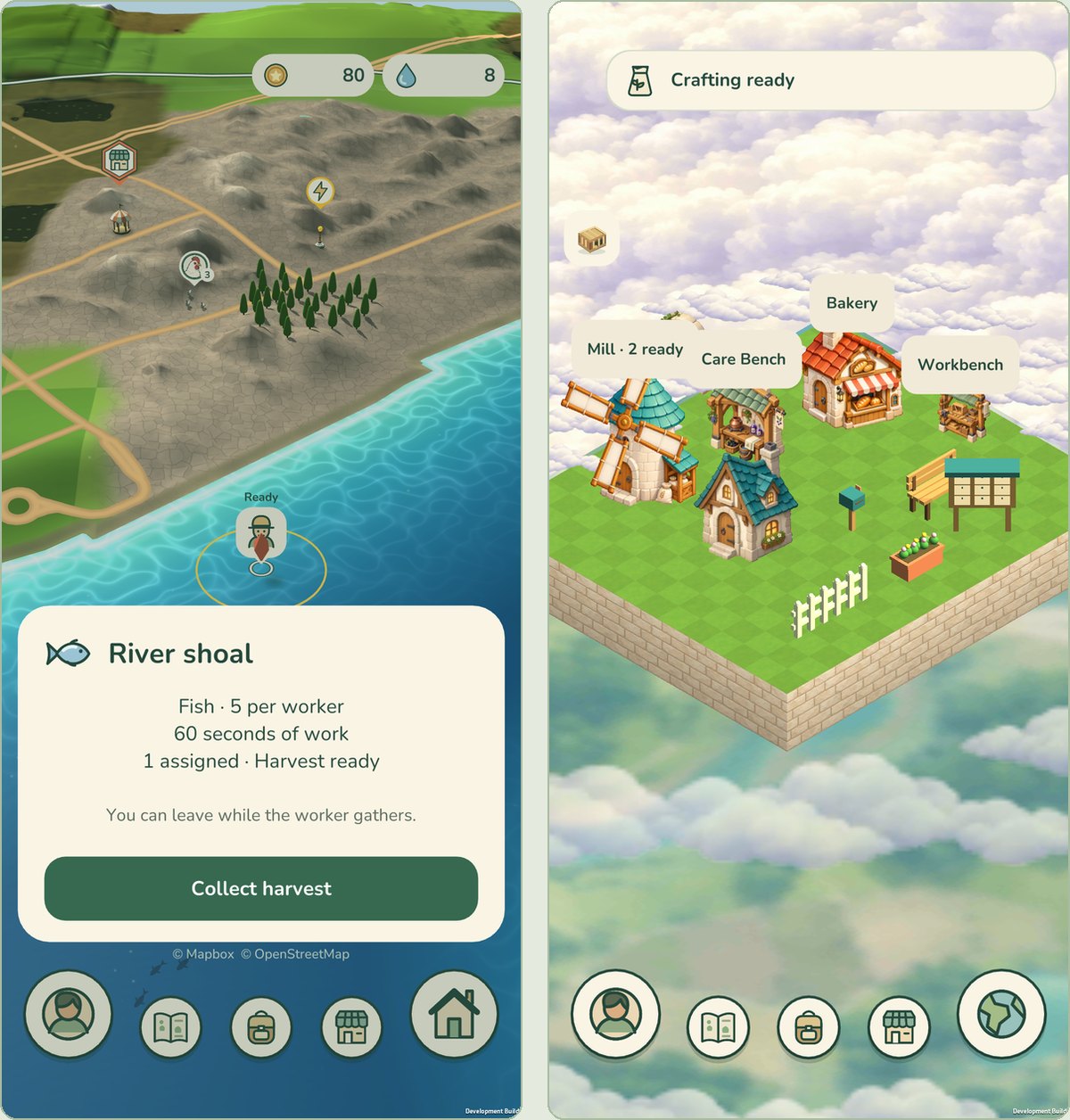
Wildlings appear in the world and are caught with traps and bait. Workers are hired at resource patches, a river shoal or a woodland, and keep gathering while you are away. What they bring home goes into Hometown’s buildings, a Mill, a Bakery, a Care Bench and a Workbench, and what you make there is sold on a player market that other players browse. Saves live in the cloud. The market runs on the server, and everything else is worked out on the phone.
How it was made
AI agents wrote the code, the tests, the tooling and the mockups, working as my development team. Over four weeks from September 2026 the work went through the same steps each time.
- Workshop. I set the pillars and the priorities, and we settled the open questions in writing before anything was drawn.
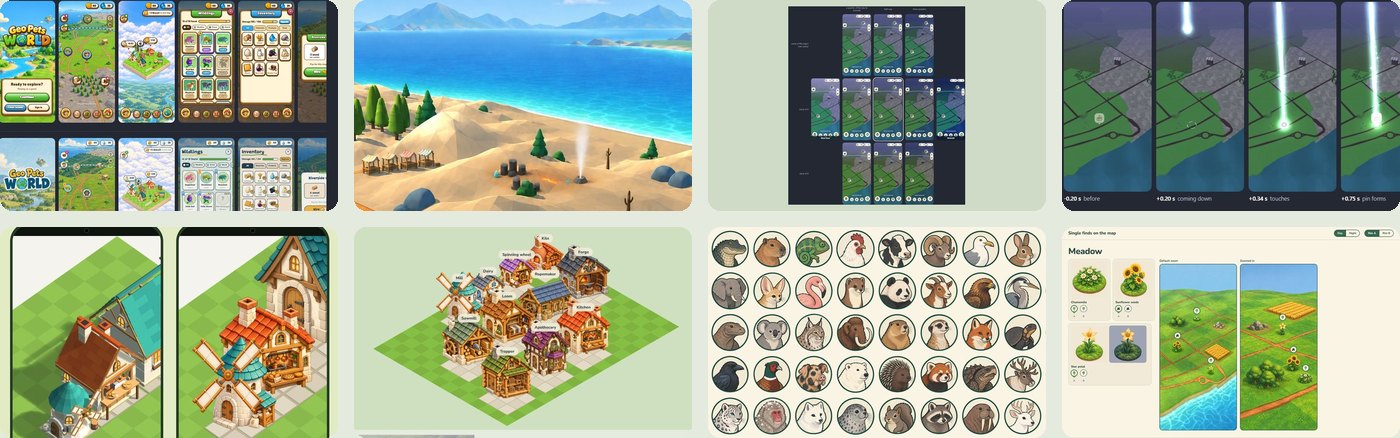
- Mockups. Working browser mockups for every screen and look, 38 bundles, each revised on my notes. Some whole visual directions were dropped at this stage.
- Specs. The agreed design went into epics and issues with acceptance criteria: 418 issues across ten epics. A decision ledger holds about 280 of my decisions, in my own words, each linked to its issue.
- Implementation. The agents built to the issues on one shared branch, with a reviewed mockup first for any new screen.
- Testing and review. Unit tests, live checks that drive the running game and capture what it drew, and an audit of delegated work by a second model before I accepted it. Those audits caught defects the tests had missed. I accepted, revised or rejected each result.
From mockup to game
Every look started as a reviewed mockup, and the game was then measured against it pixel by pixel. The water went from a browser study to the game’s shader in a day. Stonefield’s rugged ground was shaped to a set of painted references, with the roads kept clear of peaks and boulders.
Ideas explored and set aside
The Dev Log shows 43 design experiments in the order they were made, each a working page shown as built: four art directions that were not taken, the map at night, beams that lower a trap from the sky, a 3D Hometown, production lines, icons and portraits. Many of them were dropped.
Where it stands
A development build runs on my Android phone, and the phone screens on this page are taken from it. The project has been paused at the prototype stage since early October 2026 while I rethink the core loop.
Credits
Map data © Mapbox and © OpenStreetMap contributors, shown through the Online Maps plugin for Unity. All the art on this page is placeholder while the game’s own art is decided; the buildings and creatures come from asset packs. Interface typeface: Nunito, under the SIL Open Font License.